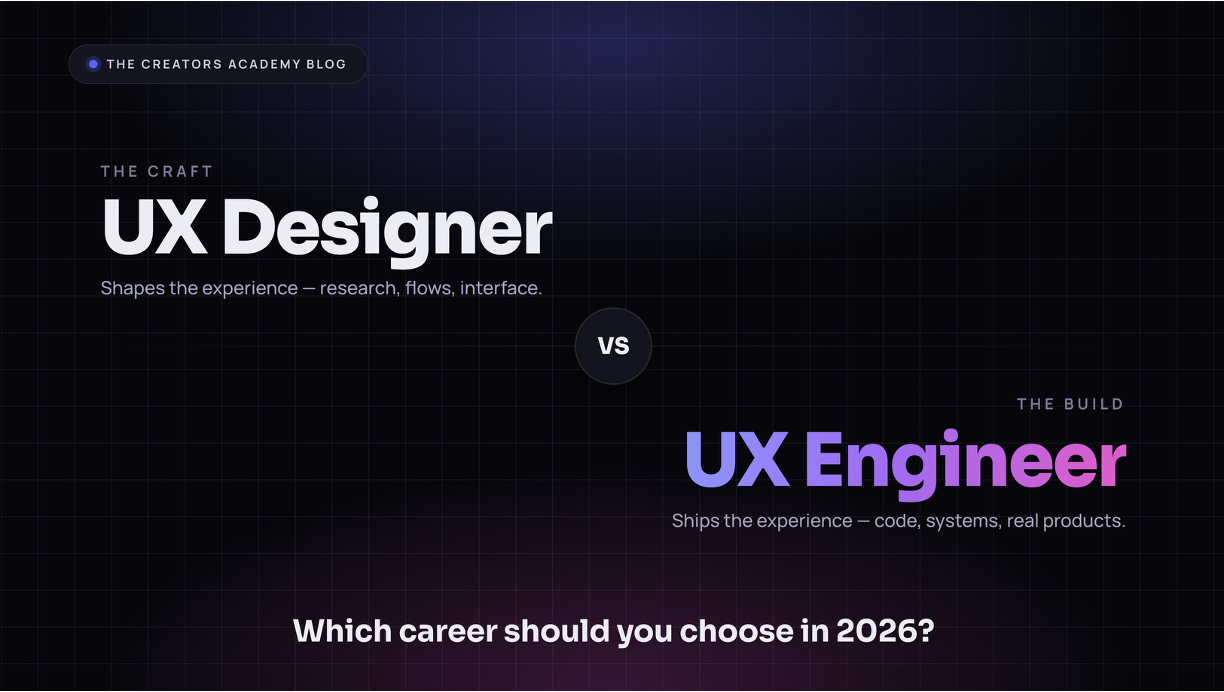

What is a UX Engineer?
A few years ago, companies hired UX Designers to create interfaces and Frontend Developers to build them. Today, that gap is disappearing. With tools like Figma Dev Mode, AI coding assistants, design systems and component libraries, companies increasingly want professionals who can both design exceptional user experiences and build them into production-ready interfaces.
This new role is called a UX Engineer.
If you've been wondering whether UX Engineering is worth learning or if it's simply another fancy job title, this guide will answer everything you need to know.
What is UX Engineer, exactly?
A UX Engineer is a professional who combines UX Design principles with Frontend Engineering skills to build digital products that are both beautiful and functional. Unlike traditional UX Designers who mainly create wireframes and prototypes, UX Engineers can transform those designs into interactive user interfaces. Think of them as the bridge between Design and Development teams. Instead of handing designs to developers and waiting weeks for implementation, UX Engineers can:
- Design user experiences
- Create high-fidelity prototypes
- Build reusable UI components
- Develop responsive interfaces
- Collaborate closely with engineers
- Improve accessibility
- Maintain design systems
In simple words...
A UX Designer designs.
A Frontend Developer builds.
A UX Engineer does both.
Why Are Companies Hiring More UX Engineers?
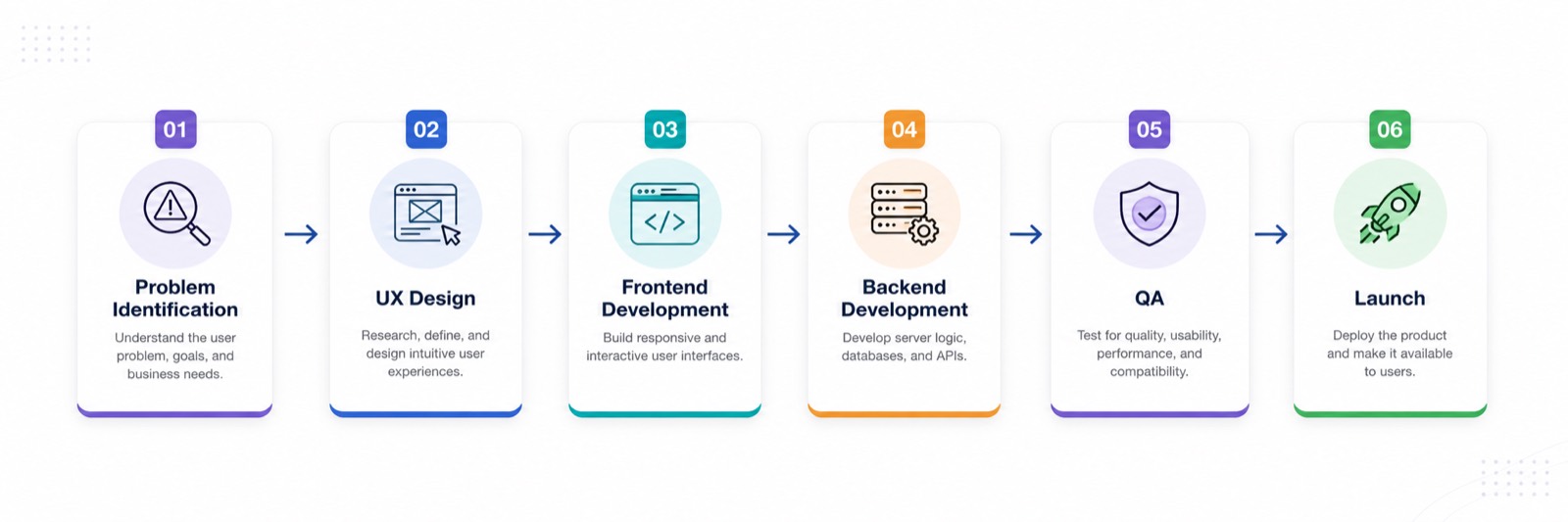
Now imagine this instead:
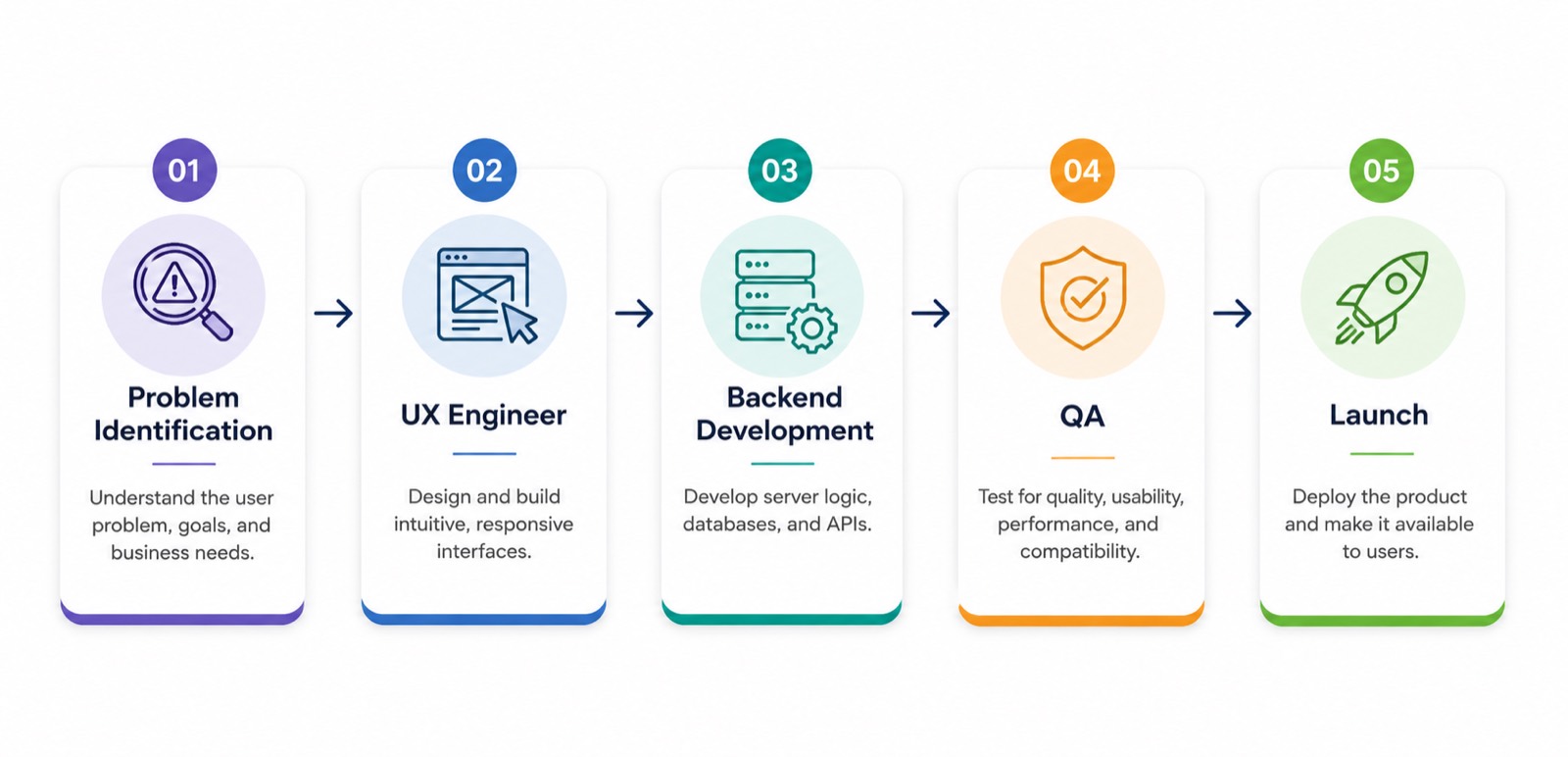
The traditional workflow separates design and frontend development, whereas the UX Engineer workflow combines both into a single role, reducing handoffs, accelerating delivery, and ensuring the final product closely matches the intended user experience.
That means:
- Faster product development
- Better design consistency
- Fewer implementation errors
- Lower development cost
- Improved collaboration
This is exactly why companies like Google, Airbnb, Microsoft, Meta, Stripe, Shopify and many fast-growing startups actively hire UX Engineers.
UX Engineer vs UX Designer
| UX Designer | UX Engineer |
|---|---|
| Conducts user research | Conducts user research |
| Creates wireframes | Creates wireframes |
| Designs interfaces | Designs interfaces |
| Creates prototypes | Builds interactive prototypes |
| Hands designs to developers | Builds interfaces themselves |
| Limited or No coding | Strong frontend knowledge |
A UX Designer focuses primarily on solving user problems through design.
A UX Engineer solves user problems and ensures those solutions become reality.
What Does a UX Engineer Do?
A typical day might include:
Understanding User Problems
Before opening Figma or VS Code, they understand:
- User goals
- Business objectives
- Pain points
- Existing workflow
Designing Solutions
Using tools like:
- Figma
- FigJam
- AI Design Tools
They create:
- Wireframes
- User flows
- High-fidelity screens
- Interactive prototypes
Building Interfaces
Instead of waiting for developers, they use:
- HTML
- CSS
- JavaScript
- React
- Next.js
- Tailwind CSS
to build real interfaces.
Working on Design Systems
Most modern companies rely on design systems.
UX Engineers build reusable:
- Buttons
- Forms
- Cards
- Tables
- Navigation
- Modals
that maintain consistency across products.
Testing and Improving
They also:
- Run usability tests
- Improve accessibility
- Fix interaction issues
- Optimize user journeys
Skills Every UX Engineer Needs
Becoming a UX Engineer doesn't mean becoming a full-stack developer. Instead, you need expertise across four areas.
1. UX Fundamentals
Understand:
- User Research
- Personas
- User Journey Maps
- Information Architecture
- Usability
- Accessibility
Without UX thinking, you're simply coding interfaces—not designing experiences.
2. UI Design
Learn:
- Typography
- Color
- Layout
- Visual hierarchy
- Components
- Responsive Design
3. Frontend Development
You don't need to master every framework.
Focus on:
- HTML
- CSS
- JavaScript
- React
- Git
- APIs
- Responsive Design
4. AI Tools
The biggest shift in UX Engineering isn't coding. It's AI.
Today's UX Engineers use AI to:
- Generate code
- Build prototypes
- Create UI variations
- Write documentation
- Review accessibility
- Speed up repetitive work
The future belongs to professionals who know how to work with AI—not compete against it.
Is Coding Mandatory?
One of the biggest myths is: "I need Computer Science to become a UX Engineer."
Not true.
- You don't need advanced algorithms.
- You don't need operating systems.
- You don't need machine learning.
You simply need enough frontend knowledge to build high-quality interfaces. Think of coding as another design tool, not a separate career. Even Figma is closing the gap between Design and Code in their platform.
🚀 Ready to Build Instead of Just Design?