AI-Driven UX Designer Course — The Creators Academy
The Creators Academy
AI-Driven UX DesignerFounding cohort · Now enrolling

Become a UX Designer
the AI-first way.

New to UX? Learn the full craft — research, design, validate, ship — with AI as your co-pilot from day one. Build a portfolio that actually gets you hired and skip the outdated, cookie-cutter path.

Founding cohort — only 30 seats at the founding price. Check Price
AI-Driven UX Designer
Full UX craftResearch to ship
AI co-pilotFrom day one
Live mentor feedbackReal critiques, live
Hire-ready portfolioSkip the outdated path

In 12-Weeks

Research. Design. Ship.
Become a UX Designer.

UX Designers who are AI-first will have an unfair advantage as the industry shifts. This program isn't about memorising methods — it's about mastering the real skills design teams want: user research, Figma craft, AI-accelerated prototyping and a portfolio that proves you can do the work.

Course Starts
Coming soon
30
Seats Left
36+
Live Sessions
User researchWireframingVisual designAI-assisted designDesign systemsInteraction designUsability testingStakeholder commsUser researchWireframingVisual designAI-assisted designDesign systemsInteraction designUsability testingStakeholder comms

Where Bikash's mentees now work

Jio
PwC
BrowserStack
Procol
Oliv
The old path doesn't work anymore

Learning design the old way
You are already starting from behind.

The field is crowded, AI is changing what "good" looks like and a generic bootcamp portfolio gets lost in the pile. The aspirants who break in today don't just make screens — they research, validate and design with intent, AI-first from day one.

Why you'll get hired

The Advantage of Becoming an AI-Driven UX Designer

The AI-Driven UX Designer

Owns research, craft and judgment. AI makes them faster — not replaceable.

Runs research, frames the problem and validates before designing.

Uses AI to move faster — without losing craft or judgment.

Owns the full chain: research → design → prototype → test → ship.

Can defend every decision with evidence, not just preference.

Graduates with a real product, tested and shipped, ready to show.

Gets hired

The Figma-Only Designer

Don't become this designer.

Makes screens look polished, calls it "design," and stops there.

Never learned to research, ideate, or validate — only to execute a brief.

Can't run a usability test or defend why a design works.

The first thing AI will replace is this Figma-Only Designer, because it's the easiest part to copy.

Portfolio full of pretty mockups — nothing tested, nothing real.

Never gets the interviewWill be replaced first by AI
Meet your mentor

Learn from someone who's actually shipped.

Bikash Joshi
Lead Mentor

Bikash Joshi

Product Leader & UX Practitioner

Bikash is a Product Leader and UX Practitioner with 12+ years of experience building digital products, leading cross-functional teams and mentoring aspiring Product Managers and Designers. Having mentored 100+ professionals, he helps learners bridge the gap between theory and real-world execution through practical projects, portfolio reviews and career guidance.

Highlights

12+ years of product-building experience
100+ mentees across Product & Design
Product leader, designer and builder

Worked With

dMACQJioMcKinseyIntegreonMTS

Products Built & Led

What Bikash's mentees say

He's done this before. People remember.

Photo
Navin Mishra
Navin Mishra
LinkedIn
Jio
Mentored by Bikash Joshi

I had the opportunity to work with Bikash for over three years, and he played a key role in shaping my growth as a designer. His mentorship went beyond design reviews—he taught me how to think critically, solve the right problems, and always put users first. The lessons I learned from him continue to influence my work today.

Photo
Mayank Parab
Mayank Parab
LinkedIn
Senior Product Designer
BrowserStack
Mentored by Bikash Joshi

Bikash didn't just mentor me in building products, he helped shape how I think. He encouraged me to look beyond execution, understand the real problem, and stay grounded in the user's perspective. That shift continues to influence how I approach decisions and solve problems.

Photo
Ashraf Shaikh
Ashraf Shaikh
LinkedIn
UX Designer
PwC
Mentored by Bikash Joshi

Bikash helped me stop designing screens and start solving real problems. His guidance transformed my portfolio and boosted my confidence during interviews.

Photo
Shravan Tiwari
Shravan Tiwari
LinkedIn
Procol
Mentored by Bikash Joshi

Bikash pushed me to think beyond the screen — questioning assumptions, grounding decisions in real user insight, and defending design choices with clear reasoning, not just taste. That shift in how I approach problems has stayed with me well beyond our sessions together.

Photo
Divyansh Pandey
Divyansh Pandey
LinkedIn
Product & Web Designer
Oliv
Mentored by Bikash Joshi

Bikash bridges the gap between theory and real-world practice. His feedback improved my portfolio, sharpened my thinking, and gave me the confidence to succeed in interviews.

Photo
Navin Mishra
Navin Mishra
LinkedIn
Jio
Mentored by Bikash Joshi

I had the opportunity to work with Bikash for over three years, and he played a key role in shaping my growth as a designer. His mentorship went beyond design reviews—he taught me how to think critically, solve the right problems, and always put users first. The lessons I learned from him continue to influence my work today.

Photo
Mayank Parab
Mayank Parab
LinkedIn
Senior Product Designer
BrowserStack
Mentored by Bikash Joshi

Bikash didn't just mentor me in building products, he helped shape how I think. He encouraged me to look beyond execution, understand the real problem, and stay grounded in the user's perspective. That shift continues to influence how I approach decisions and solve problems.

Photo
Ashraf Shaikh
Ashraf Shaikh
LinkedIn
UX Designer
PwC
Mentored by Bikash Joshi

Bikash helped me stop designing screens and start solving real problems. His guidance transformed my portfolio and boosted my confidence during interviews.

Photo
Shravan Tiwari
Shravan Tiwari
LinkedIn
Procol
Mentored by Bikash Joshi

Bikash pushed me to think beyond the screen — questioning assumptions, grounding decisions in real user insight, and defending design choices with clear reasoning, not just taste. That shift in how I approach problems has stayed with me well beyond our sessions together.

Photo
Divyansh Pandey
Divyansh Pandey
LinkedIn
Product & Web Designer
Oliv
Mentored by Bikash Joshi

Bikash bridges the gap between theory and real-world practice. His feedback improved my portfolio, sharpened my thinking, and gave me the confidence to succeed in interviews.

Tools you'll master

Master the tools the next-gen UX Designer actually uses.

The toolkit a modern UX Designer uses to move from research to shipped product.

The tools you'll actually use
Figma
Miro
ChatGPT
Claude
Lovable
Replit
NanoBanana
Amplitude
MixPanel
Maze
UserTesting

How an AI-Driven UX Designer actually works

Research & Synthesis
UserTesting / ChatGPT / Claude
Ideation
Miro / Figjam
Wireframing
Whimsical / Figma Make / Claude Design / Lovable / Replit
Prototyping
Figma Make / Claude Design / Lovable / Replit
Design Systems
Figma / Claude Design
UI Design
Figma / Claude Design
Image & Illustration Creation
ChatGPT / NanoBanana
User Testing
UserTesting / Maze
Product Analytics
Amplitude / MixPanel

Final tool list confirmed before start — we teach what you'll genuinely use.

What you'll learn

Course Curriculum

What is Design? (definition, good vs bad design, design around us)
What is UX Design? (definition, UX vs UI, why UX matters, good & bad UX examples)
Roles in UX (Researcher, UX Designer, UI Designer, Interaction Designer, Content Designer, UX Writer, Design System Designer, UX Manager)
Components of UX — high-level map (research, IA, interaction, UI, accessibility, UX writing, content strategy, usability, motion)
FoundationsUX vs UIRoles
Design Thinking (Empathize, Define, Ideate, Prototype, Test)
Double Diamond (Discover, Define, Develop, Deliver)
The Ultimate UX Process
How AI compresses each stage of the process
Design ThinkingDouble DiamondProcess
Human Psychology (mental models, cognitive load, attention, memory, decision-making, biases) Learn how these factors influence your design
UX Laws (Hick's, Fitts's, Jakob's, Miller's, Peak-End, Von Restorff etc.)
Heuristic Evaluation (10 Nielsen Heuristics)
PsychologyUX LawsHeuristics
The AI-augmented designer (what to delegate vs own)
AI Tool landscape (Figma Make, ChatGPT, Claude Design, Lovable, Replit, Nano Banana)
Prompting for designers (usable output, not slop)
Workflow setup (how AI plugs into each module)
AI ToolsPromptingWorkflow
Fundamentals (why research matters, qualitative vs quantitative)
Methods (user interviews, surveys, contextual inquiry, competitive analysis)
AI in research (transcription, synthesis, affinity mapping, theme surfacing)
Outputs (personas, empathy maps, journey maps, insights) — AI-assisted drafting
ResearchInterviewsAI Synthesis
IA (what it is, navigation systems, taxonomy, content hierarchy)
Flows (user flows, task flows, journey mapping)
AI for IA (taxonomy generation, card-sort analysis, first-draft flows)
IAUser FlowsNavigation
Interaction Design (principles, affordances, feedback, states)
Prototyping (low / mid / high fidelity)
AI rapid prototyping (flow to clickable prototype, AI iteration)
InteractionPrototypingAI Prototyping
Fundamentals (visual hierarchy, typography, color theory, layout & grids, white space)
Components & Patterns (forms, buttons, tables, navigation)
Responsive Design (mobile, tablet, desktop)
In-depth Training of Figma
AI UI generation (Figma AI / v0, refined against craft fundamentals)
UI DesignComponentsAI UI
UX Writing (microcopy, error messages, empty states, onboarding) — AI-assisted drafting
Content Strategy (content hierarchy, content audits)
Accessibility (WCAG, color contrast, keyboard navigation, screen readers) — AI accessibility checks
UX WritingAccessibilityContent
What is a Design System?
Components (foundations, components, patterns, tokens)
Using & contributing (working within a system, building reusable components)
AI for systems (component variants, token documentation)
Design SystemsTokensComponents
Usability Testing (moderated, unmoderated, A/B testing) — AI for result analysis
UX Audits (conducting heuristic reviews)
UsabilityTestingAudits
End-to-end AI-augmented project: Problem Identification → User Research → Personas → User Flow → Wireframes → Prototype → Usability Testing → UI Design → Design System usage → Final Case Study
CapstonePortfolioCase Study
1:1 mentor sessions (personalized feedback on your work and progress)
Portfolio review & refinement (get your case study portfolio-ready)
Career counseling (career paths, role targeting, job-search strategy)
Interview prep (portfolio walkthrough, design challenges, behavioral rounds)
MentorshipCareerPortfolio
Present your capstone to a panel of industry leaders
Live feedback from practicing designers and hiring managers
Networking with mentors, peers, and industry guests
Showcase your AI-augmented design work to potential employers
Demo DayShowcaseNetworking
Create a compelling portfolio

Work on real world projects to apply your learnings

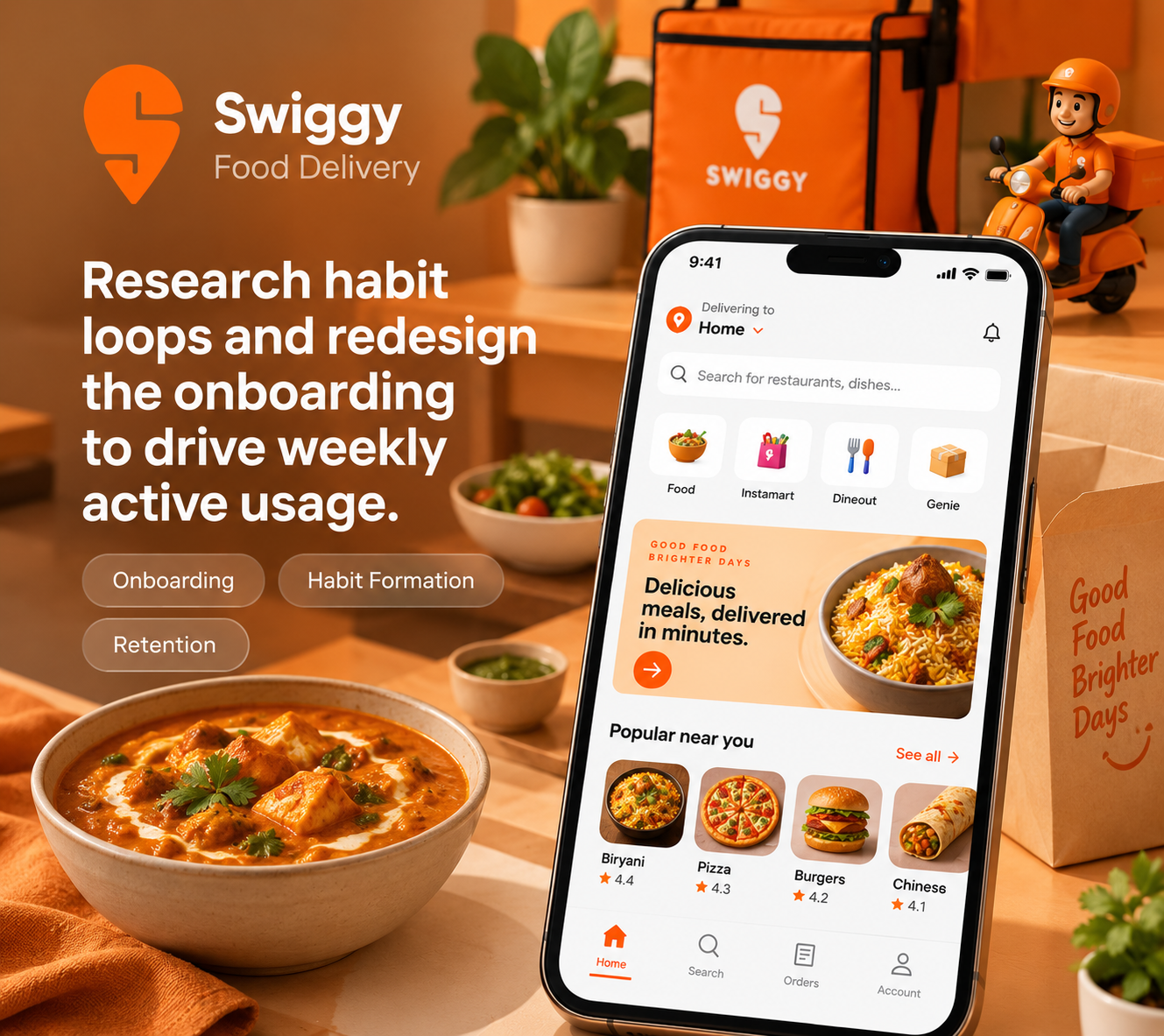
Swiggy

Research habit loops and redesign the onboarding to drive weekly active usage.

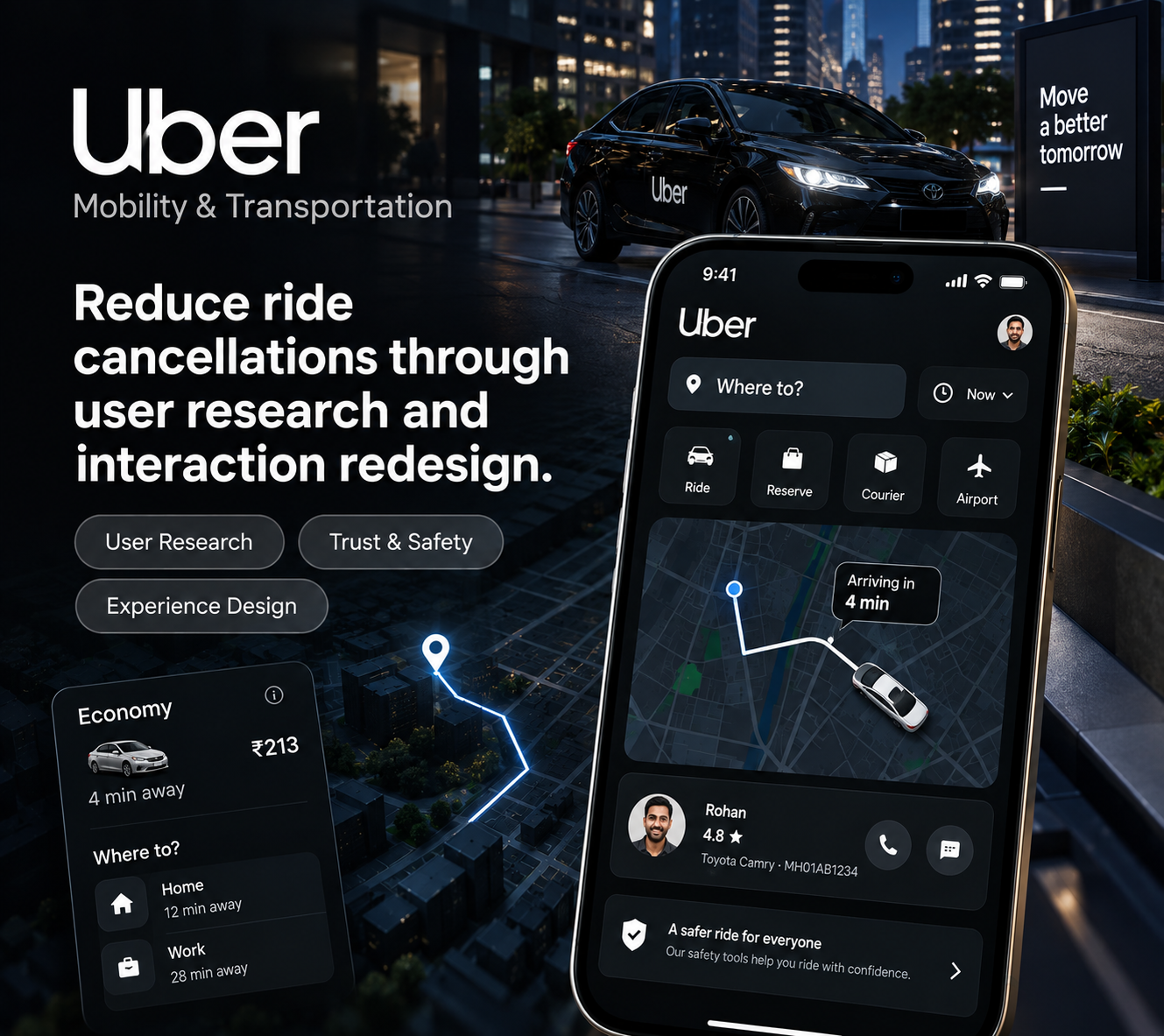
Uber

Reduce ride cancellations through user research and interaction redesign.

Netflix

Improve content discovery and reduce early drop-offs for new viewers.

Your credential

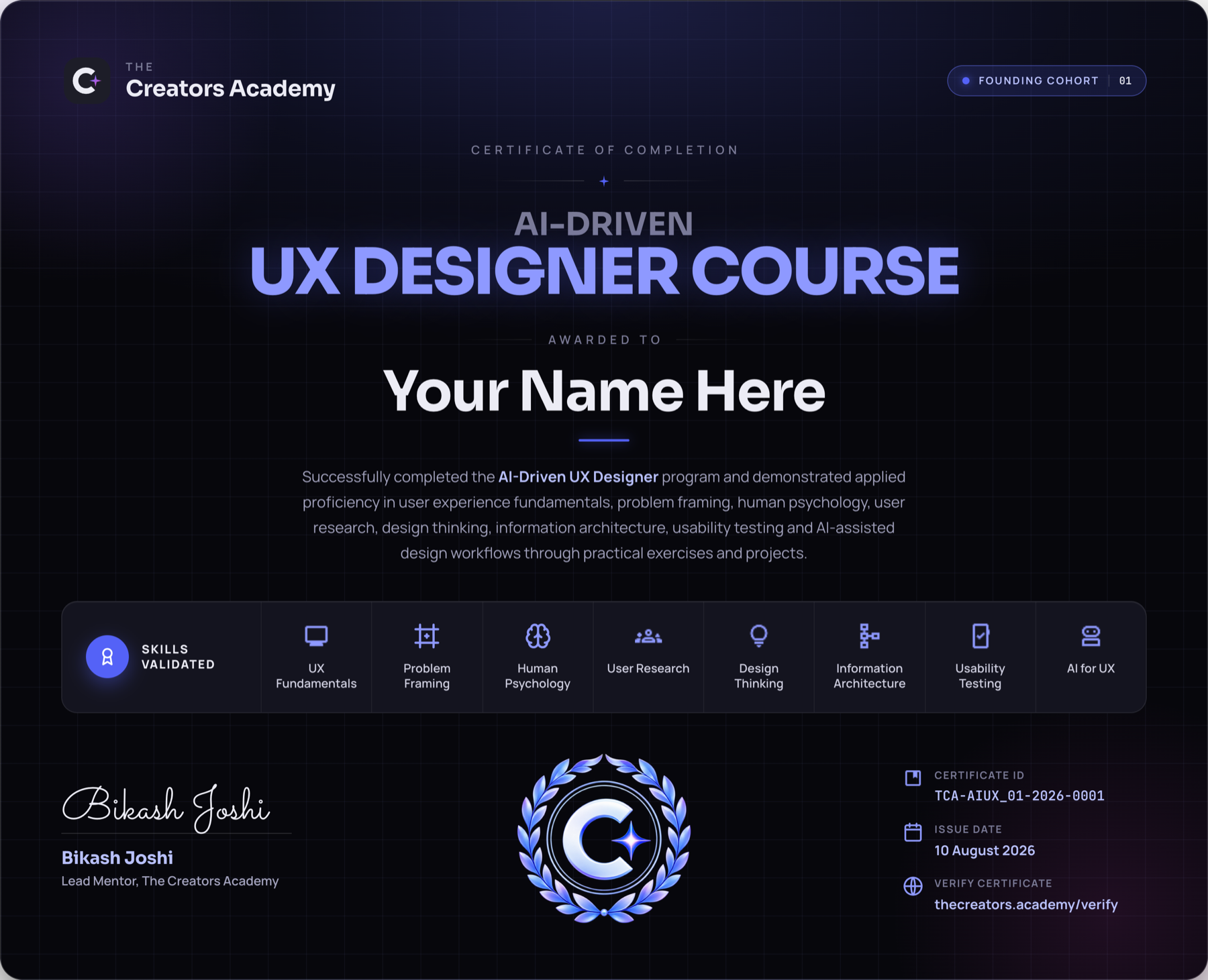
Earn your certificate of completion.

Finish the cohort having owned a real design case study end to end — and a certificate that says you did. We keep the claim modest: completion, not accreditation. The proof is the work.

Awarded on a shipped case study — not attendance
Signed by your Lead Mentor
Shareable on LinkedIn and your portfolio
AI-Driven UX Designer Certificate
Program at a glance

The course is built to make you a designer who actually gets hired.

AI-first curriculum

The tools and workflows the next-gen UX Designer actually ships with.

Live, mentor-led sessions

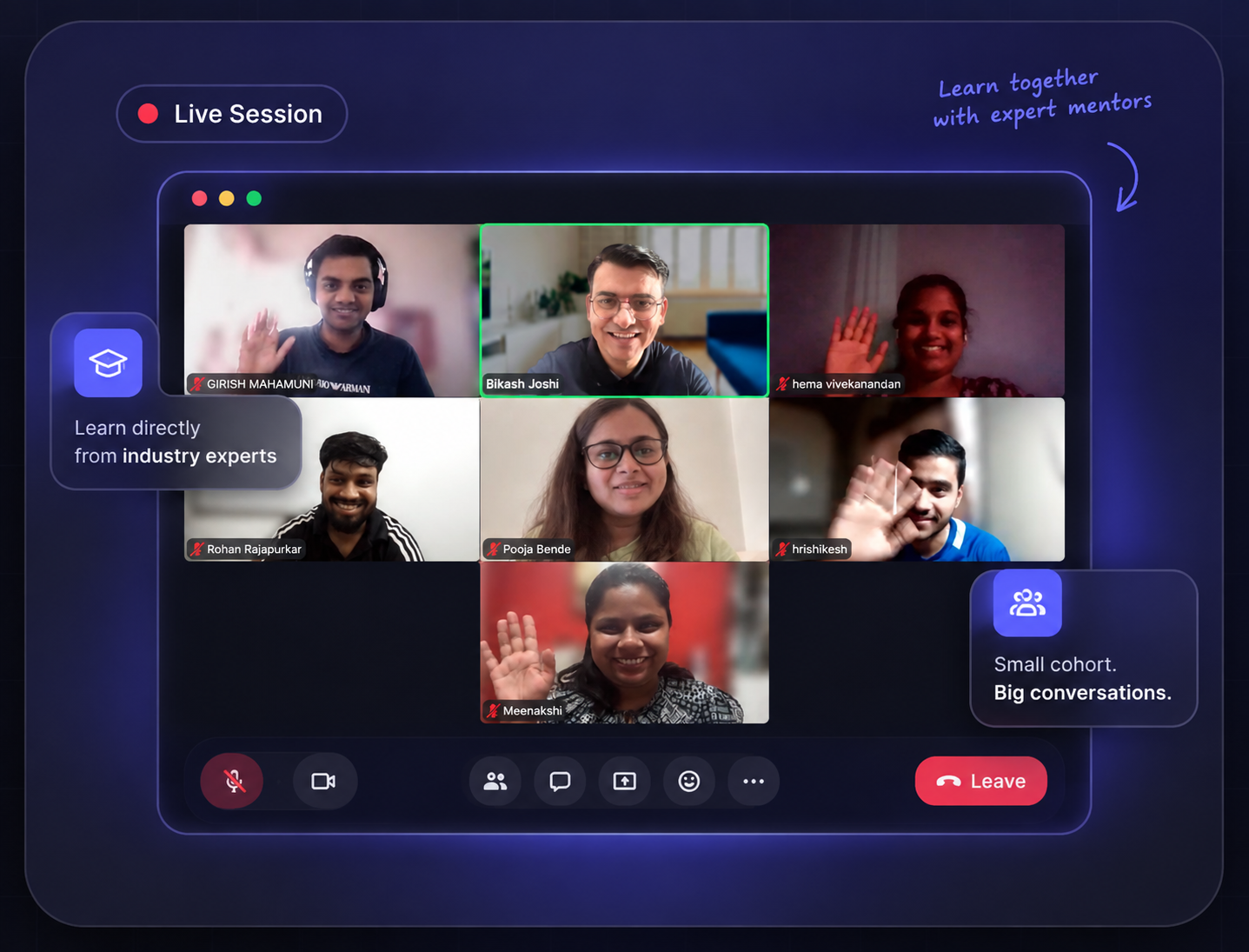
Real-time, hands-on work. No pre-recorded videos — all sessions are live with the mentor.

Real-product capstone

You finish with a case study that proves your understanding of the full design process, from research to polished UI screens.

1:1 with your mentor

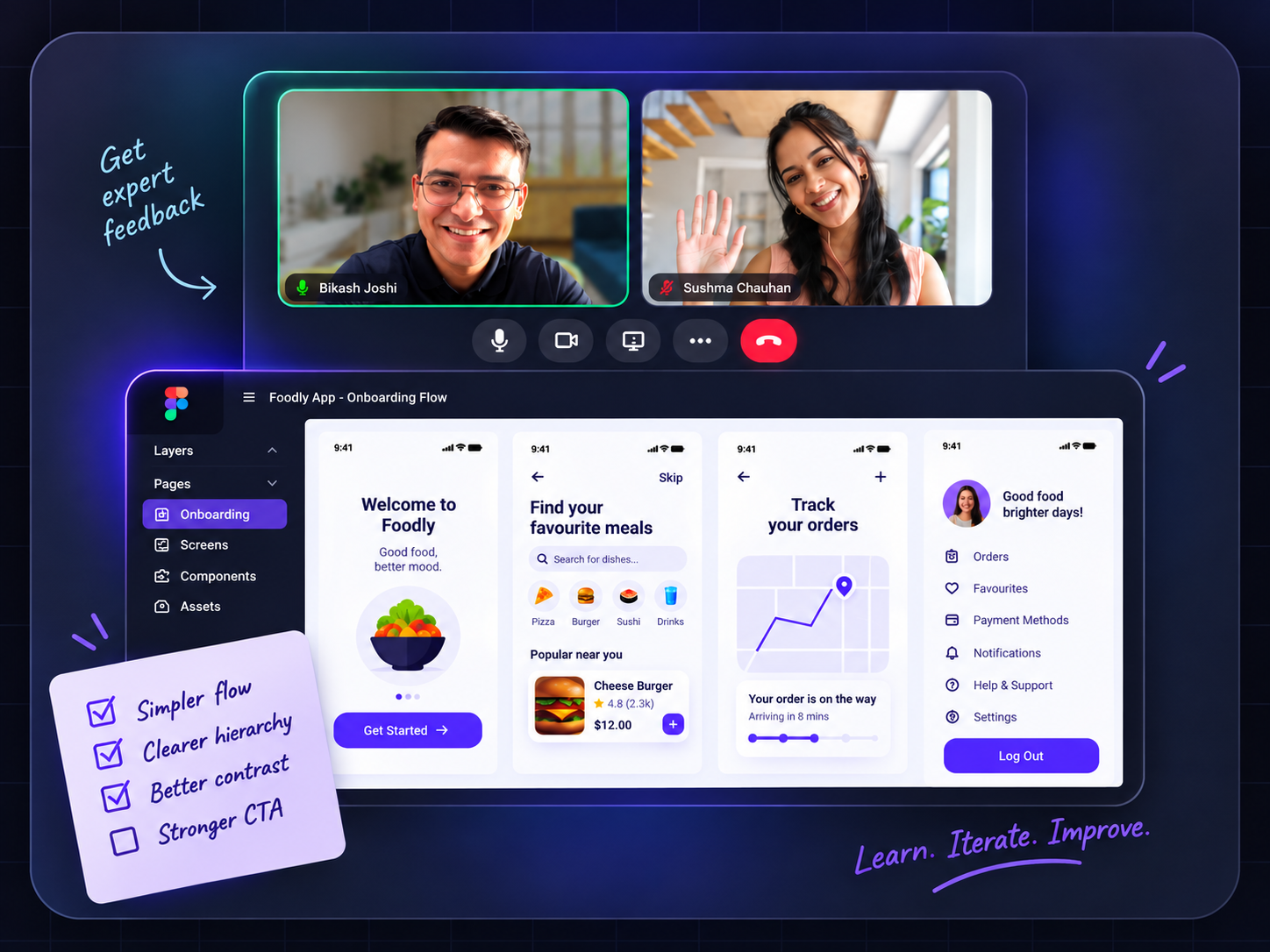
Direct feedback on your work and 1:1 session with mentor to clarify doubts and on how to move ahead.

Founding cohort community

A small founding cohort so you get more time with the mentor.

Career support

Portfolio reviews, positioning and mock interviews. Everything you need to walk into an interview ready.

12 weeksPlanned duration
Live & Mentor-ledAll sessions live
30 Seats OnlyFounding cohort
Founding priceEnrol now

Duration and exact dates confirmed with enrolled members before start.

Get portfolio-ready

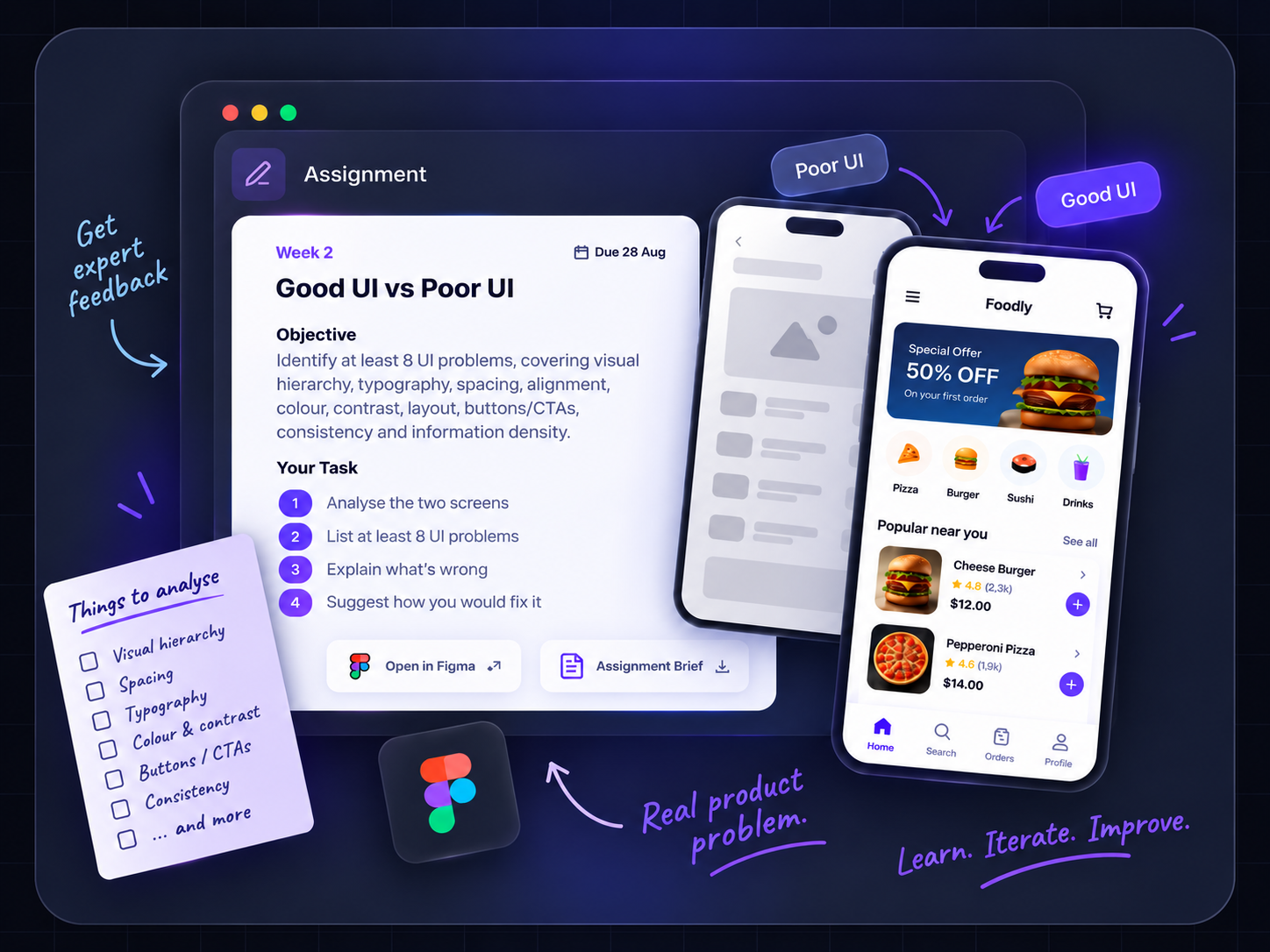
Weekly portfolio critique sessions.

Weekly structured critique across every dimension of a UX portfolio — so you walk into interviews with work you can actually defend.

Visual design critique

Structured feedback on your UI craft — hierarchy, spacing, colour and intent.

Research critique

How sharp is your problem framing? Is the insight driving the design, or just decorating it?

Process critique

Walk through your decisions — can you defend them clearly? That's what interviewers probe.

Design system review

Are your components consistent and reusable? Would a dev thank you or rewrite everything?

Interaction review

Do the flows feel natural? Are there friction points you stopped noticing?

Behavioural prep

How you talk about your process is as important as the work. We prep both.

Cadence and format confirmed before launch.

How your week looksTentative

Tentative Weekly schedule.

Recurring sessions across the program. These times are planned and finalised before launch.

Core session
Live, mentor-led learning
Sat & Sun·8:00–11:00 AM IST
Learn the week's core UX concept and framework
Understand how the concept applies in real-world projects
Receive the assignment and project brief for the week
Q&A session
Assignment clarification & mentor support
Wednesday·8:00 PM IST
Get answers to questions about the week's assignment
Clarify concepts, expectations, and deliverables
Resolve blockers and gain confidence before submission
Assignment
Hands-on application of learning
Due on Friday of the same week·Async
Complete the assignment shared during the Core Session
Apply the week's concepts to a practical design challenge
Submit your work for mentor review and feedback

Provisional schedule — final times confirmed with enrolled members before start.

Capstone & Demo Day

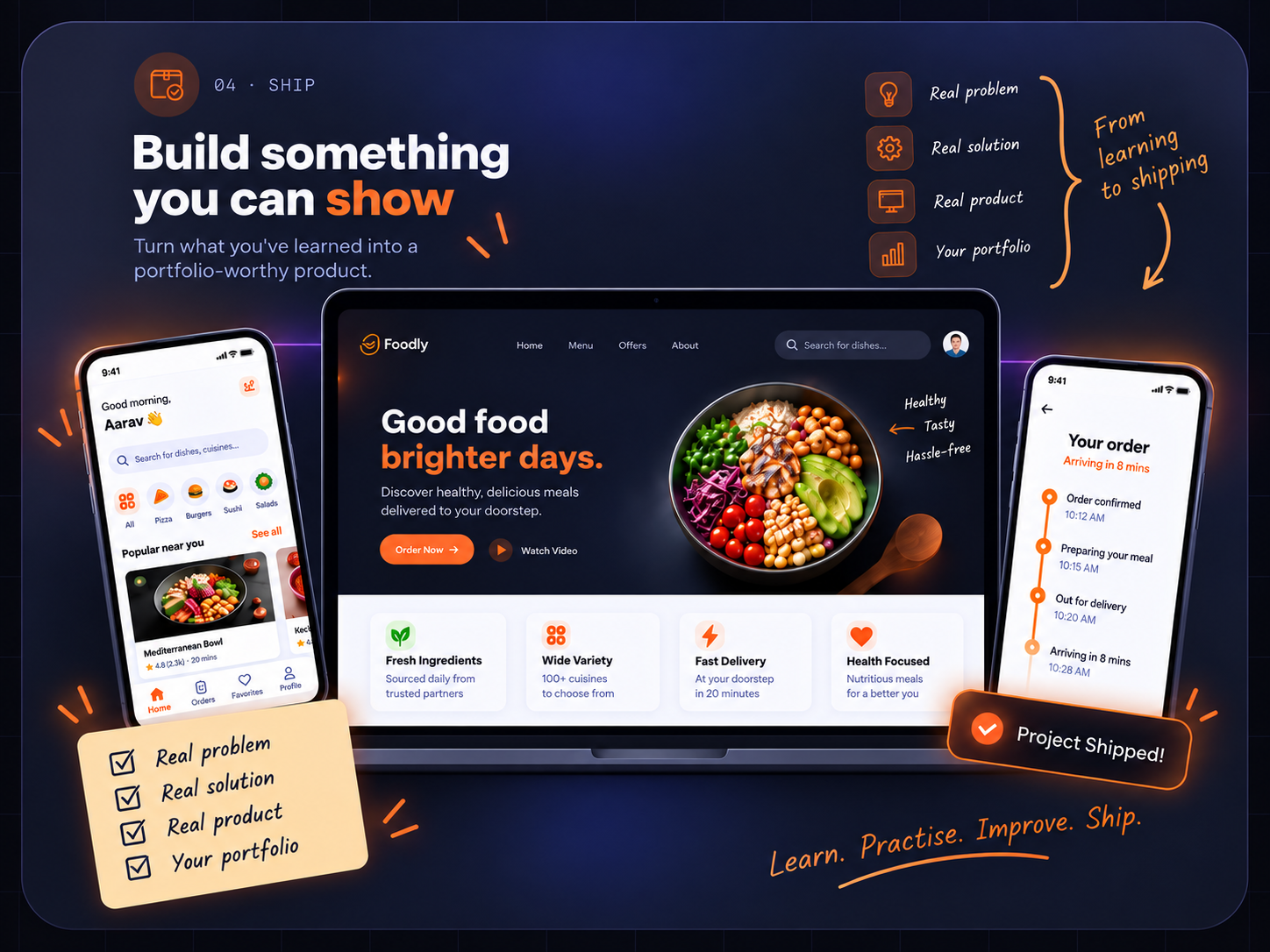
One real design case study — owned end to end.

Your capstone is the centrepiece of your portfolio: a design you took from research to final screens yourself, then presented at a cohort Demo Day to your mentor and peers.

01

Run real user research

Pick a real product problem and do the discovery yourself — interviews, synthesis, insight.

02

Design & validate

Wireframe, design, prototype and test with real users. Own every decision.

03

Present at Demo Day

Walk the cohort and your mentor through the full design process and the outcome.

Career support

Career support to back your move.

We back your move with real support — critique, positioning and interview prep. We make you ready to win a role; we don't promise one.

Portfolio critique

Structured feedback on every case study — what works, what doesn't, what to fix.

Professional branding

LinkedIn, portfolio site and a narrative that shows you're a design thinker.

Career counselling

A clear next step and the design roles worth targeting based on your work.

Design interview prep

Sharpen how you walk through your process — because that's what gets you hired.

Only 30 Seats are Available.

A small founding cohort is open now — apply before the seats are gone.

Honest fit

Is this program for you?

Break into UX Design or level up your craft — the AI-first way. This is for people ready to own outcomes, not just make screens.

Aspiring UX Designers
breaking into design the right way — research-first, AI-first from day one
Graphic / visual designers
moving into UX and ready to own the full design process, not just the visuals
Career switchers
from any background, ready to build a real portfolio and break into UX roles
Students
in design, business, or any field — building a UX foundation the modern way
Non-design backgrounds
curious about UX and ready to start from zero with AI as your co-pilot
Researchers and PMs
who want to design well enough to own more of the product
Founding cohort

Enrol now — at the founding price.

A small founding cohort is open now. Only 30 seats — enrol to lock in the founding price before they're gone.

What founding members get
30 seats per cohort
The Founding cohort is made small on purpose to give more direct mentor time than a larger program ever could.
Founding price
A one-time founding rate for Cohort 01, confirmed when you apply.
Shape the program
Your feedback directly shapes how the course evolves. You're learner #1, not #1,001.
Program Fees
EMI option available in Payment Page EMI Starts at ₹5,000 Per Month
What's Next
Designer today. Engineer tomorrow.
Once you've built the design foundation, the UX Engineer track adds the build layer. You'll learn HTML, CSS, JavaScript and React — then use AI to write the code while you validate, direct and own the output.
FAQs

Good to know

UX (User Experience) Design is the process of creating products, services, and experiences that are useful, usable, and enjoyable for users. It focuses on understanding user needs and solving real-world problems through thoughtful design.

An AI-Driven UX Designer combines traditional UX skills with AI-powered tools to conduct research, generate ideas, create prototypes, and improve design workflows. AI helps designers work faster, but human creativity, empathy, and problem-solving remain essential.

Anyone can become a UX Designer regardless of their educational background. Students, working professionals, marketers, engineers, business professionals, and career switchers can all transition into UX Design.

Yes. This program is designed for complete beginners and does not require prior experience in design, technology, or coding.

No. Most employers hire UX Designers based on their skills, portfolio, problem-solving ability, and practical experience rather than a formal design degree.

No. Coding is not required to become a UX Designer. However, understanding basic web and mobile technologies can help you collaborate more effectively with developers.

You will learn User Research, Information Architecture, Interaction Design, UI Design, Prototyping, UX Writing, Accessibility, Usability Testing, Design Systems, and AI-powered UX workflows.

You will gain hands-on experience with industry-standard tools such as Figma, FigJam, Miro, AI-powered design tools, and other collaboration platforms commonly used by UX professionals.

The program covers the complete UX design process—from understanding users and defining problems to creating prototypes, designing interfaces, testing solutions, and building a professional portfolio.

Yes. You'll work on practical projects and case studies that simulate real-world product design challenges and help you build industry-relevant experience.

Absolutely. By the end of the program, you'll have portfolio-ready case studies that showcase your design thinking, problem-solving approach, and UX design skills.

Classes are held every Saturday and Sunday, with each session lasting approximately 3–4 hours.

Yes. The weekend schedule is specifically designed to accommodate students, freelancers, and working professionals.

The Founding Cohort is the first-ever batch of learners joining the UX Designer Program. Founding members receive exclusive benefits, direct mentor access, and the opportunity to help shape the future of the program.

We intentionally limit enrollment to 30 learners to ensure personalized mentorship, meaningful feedback, active participation, and a high-quality learning experience.

No. AI can automate repetitive tasks, but it cannot replace human empathy, critical thinking, strategic decision-making, and creativity. The future belongs to UX Designers who know how to effectively use AI.

Yes. As businesses continue to invest in digital products and AI-powered experiences, demand for skilled UX Designers remains strong across industries such as technology, fintech, healthcare, e-commerce, and SaaS.

No, we do not offer a job guarantee. However, we provide practical training, portfolio development, mentorship, and career guidance to help learners become job-ready and competitive in the market.

Yes. Learners who successfully complete the program and meet the course requirements will receive a certificate of completion from The Creators Academy.

Unlike traditional courses that focus only on tools, this program teaches the complete UX mindset, design process, AI-driven workflows, portfolio building, and real-world problem-solving through hands-on projects and mentor-led learning.